What Is Forest Bathing? The Science of Shinrin-Yoku
Listen to this article
Listen to this article
Listen while you read
🌊 Nature sounds
Press play and let the music stay with you while you read. No need to leave the page.
This player uses YouTube, which sets third-party cookies. Load it only if you want to.
Clicking accepts marketing/media cookies.
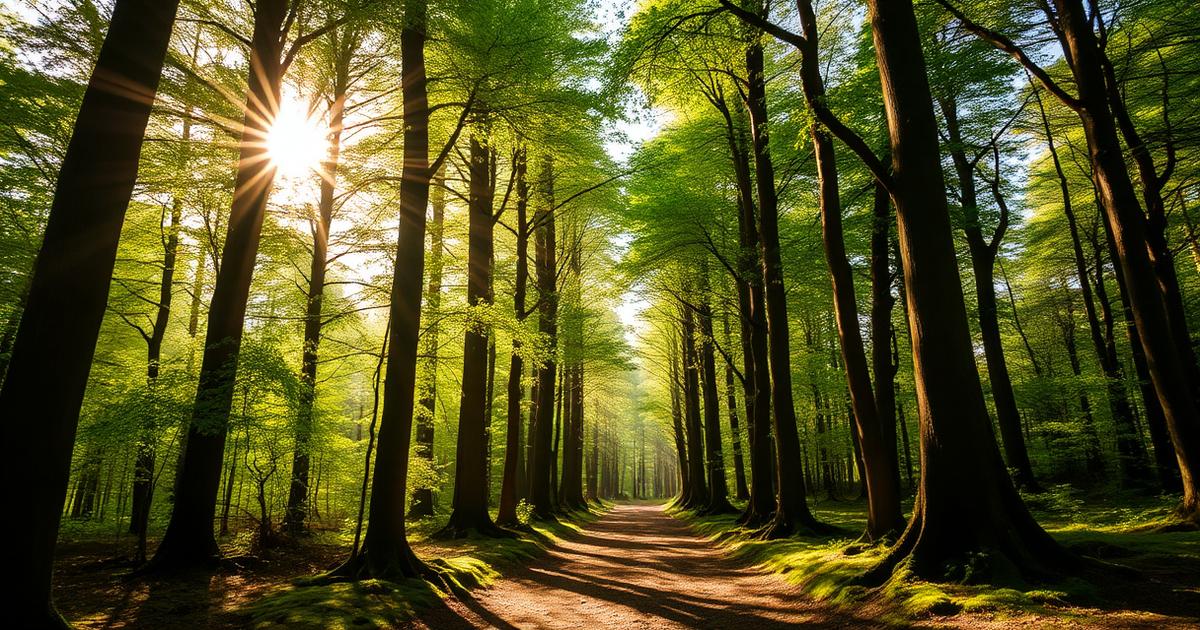
Picture yourself walking slowly through a forest. There is no destination, no pace to keep, nowhere to be. You simply move gently among the trees, breathing in the cool, green-scented air, listening to birdsong and the whisper of leaves, feeling the soft ground beneath your feet. Your shoulders drop. Your mind grows quiet. Something in you settles.
You have just experienced the essence of "forest bathing", and remarkably, science shows it is one of the most effective natural ways to reduce stress and support your health. Let's explore this beautiful practice, the surprising research behind it, and how you can try it, even if you do not live near a forest.
What Exactly Is Forest Bathing?
Forest bathing is the English translation of the Japanese term shinrin-yoku (shinrin means "forest," yoku means "bath"). Despite the name, it involves no water at all. Instead, it means bathing your senses in the atmosphere of the forest, immersing yourself mindfully in nature.
Here is the key thing to understand: forest bathing is not hiking or exercise. There is no goal, no distance to cover, no workout. It is a slow, intentional, mindful experience of simply being present in nature, engaging all five senses. You notice the play of sunlight through the leaves, the texture of bark, the scent of the earth, the sound of birds, the feeling of the air. It is mindfulness, practiced outdoors.
Where Did It Come From?
Shinrin-yoku is a relatively modern practice with ancient roots. The term was coined in 1982 by the Japanese Ministry of Agriculture, Forestry, and Fisheries, as a response to the intense stress and technology-driven burnout of Japan's booming economy at the time.
It was designed as a public-health initiative to reconnect stressed, overworked people with the calming power of nature, and it worked so well that it became part of Japan's national health program. Since then, backed by a growing body of research, forest bathing has spread around the world, from South Korea to Finland to the United States.
The Surprising Science: Why Forest Bathing Works
This is where it gets fascinating. Forest bathing is not just a pleasant idea, it produces real, measurable effects on the body and mind. Researchers have studied it extensively, and the findings are striking.
It lowers stress hormones. A major review found that forest bathing significantly reduces cortisol, the body's main stress hormone. Time among the trees measurably calms your stress response.
It calms your heart and body. Studies show forest bathing can lower blood pressure and slow heart rate, easing your body out of "fight or flight" and into a state of rest.
It boosts your immune system, remarkably. Here is the most surprising discovery. Trees release airborne compounds called phytoncides, natural oils they use to protect themselves. When you breathe forest air, you inhale these compounds, and influential research by Dr. Qing Li in Japan found that they increase the activity of your "natural killer" (NK) cells, a key part of your immune system. In other words, breathing forest air can literally strengthen your body's defenses.
It eases anxiety and lifts mood. Multiple reviews have found that forest bathing significantly improves psychological wellbeing, easing tension, anxiety, and symptoms of depression.
It restores your focus. Immersing yourself in nature gives your overstimulated, screen-weary brain a chance to reset, which can improve attention and creativity and reduce mental burnout.
Not bad for a slow walk among the trees.
How to Practice Forest Bathing
The beauty of shinrin-yoku is its simplicity. You do not need any equipment, training, or even a remote wilderness, a local park or any green space will do. Here is how to begin:
Leave your devices behind. Silence your phone or leave it in your pocket. The whole point is to disconnect from the digital world and reconnect with the natural one.
Go slowly, with no destination. This is not a hike. Wander aimlessly. Let your feet lead. There is nowhere to be and nothing to achieve.
Engage all five senses. This is the heart of the practice. Notice what you see, the colors, the light, the movement. Listen to the sounds, birdsong, wind, rustling leaves. Breathe in the scents of the earth and trees. Touch the bark, the leaves, the moss. Feel the air on your skin.
Breathe deeply and slowly. Let your breath fall into a calm, natural rhythm, and take in that fresh, phytoncide-rich air.
Take your time. Even a short session helps, but research suggests that spending at least a couple of hours, or sessions of around 90 minutes or more, allows the deepest benefits to unfold. Let yourself linger.
Simply be present. If your mind wanders to your to-do list, gently guide it back to the sights and sounds around you. That is the whole practice.
No Forest Nearby? Bring It to You
Here is the wonderful part: while a real forest is ideal, you can capture some of the same calming magic even without one. Any green space, a park, a garden, a tree-lined street, offers benefits. And when you cannot get outside at all, you can still soothe your nervous system by bringing nature indoors.
Studies have shown that even recorded nature sounds produce measurable relaxation. So on days when the forest is out of reach, you can close your eyes, play the gentle sounds of birdsong, rustling leaves, or a flowing stream, add some plants or natural light to your space, and let your body respond to the atmosphere of nature. It is a beautiful way to bring a touch of the forest's calm into your everyday life, anytime you need it.
Step Into the Calm
In a world that moves faster every day, forest bathing is a gentle reminder of something we instinctively know: nature heals us. We evolved among trees and open skies, and our bodies still recognize them as home.
So this week, give yourself the gift of slowing down among the green. Step into a park or forest, put your phone away, breathe deeply, and simply be. And on the days you cannot get away, let the sounds of nature carry a little of that peace to you, wherever you are.
The forest is waiting, and so is your calm.
At Deep Relax Music, we blend soft instrumental melodies with the soothing sounds of nature, gentle birdsong, flowing water, and quiet forest ambience, to help you find calm wherever you are. Press play and let nature come to you.
Listen on YouTube → • Stream on Spotify →
Keep reading: Why nature sounds help you relax • Nature sounds for anxiety • Meditation for beginners: mistakes to avoid • How to reduce stress during a busy day • How to make your home feel calm and cozy
This article was created with the assistance of AI and reviewed by our team for accuracy. It is intended for general wellness and informational purposes only and is not medical advice.