Why Lo-Fi Music Helps You Study and Focus Better
Listen to this article
Listen to this article
Listen while you read
📚 Focus music
Press play and let the music stay with you while you read. No need to leave the page.
This player uses YouTube, which sets third-party cookies. Load it only if you want to.
Clicking accepts marketing/media cookies.
Somewhere right now, a student is opening a laptop, pulling up a "lo-fi beats to study to" stream, and settling in for a few hours of work with those warm, crackly beats playing softly in the background. This scene repeats millions of times a day around the world. Lo-fi has quietly become the unofficial soundtrack of focus.
But why? What is it about this gentle, imperfect music that helps so many people concentrate, relax, and get into the zone? Let's unpack what lo-fi actually is and the real science behind why it works.
What Is Lo-Fi Music?
"Lo-fi" is short for "low fidelity." While most modern music is recorded to sound as clean and polished as possible (high fidelity), lo-fi does the opposite, on purpose. It embraces imperfection. Those soft crackles, gentle static, faint hums, and background textures are not mistakes. They are the whole point.
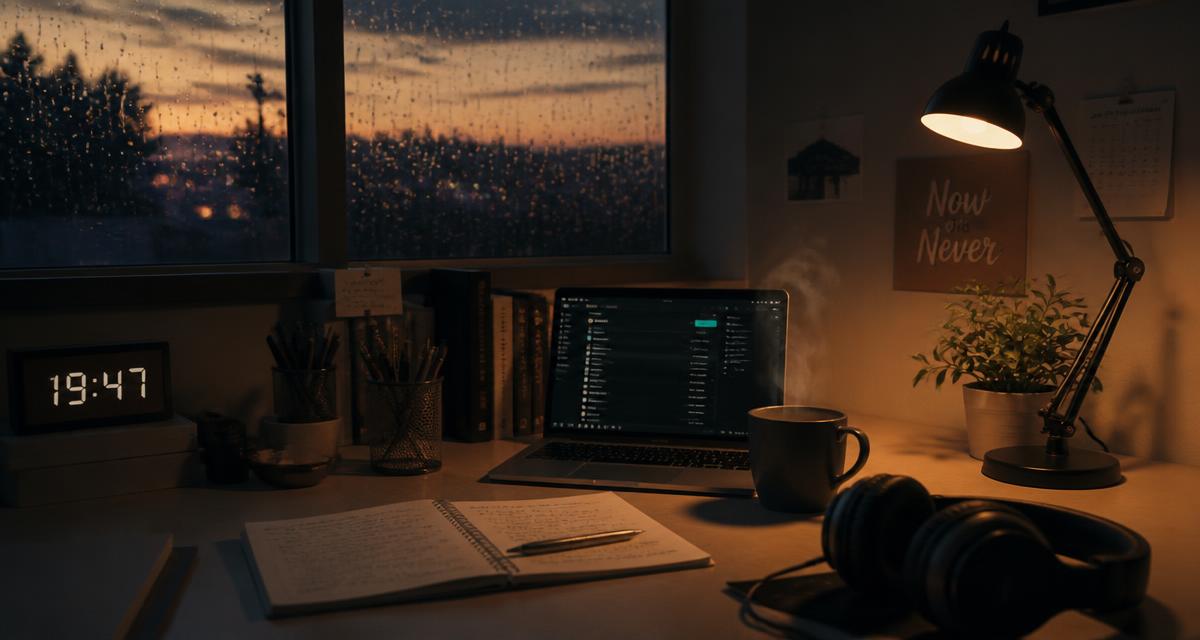
Musically, lo-fi usually combines three signature ingredients: a simple, steady beat, warm and jazzy chord progressions, and layers of ambient sound, like rain, vinyl crackle, or distant city noise. Together they create a cozy, relaxed atmosphere that feels a little like a rainy afternoon in a quiet cafe.
The genre has roots going back decades, but it exploded in popularity in recent years, especially as more people began studying and working from home and needed a gentle background sound to help them focus.
Why Does Lo-Fi Help You Focus?
Here is where it gets interesting. Lo-fi's effectiveness is not just a trend, there are real reasons it works so well for concentration.
No Lyrics to Compete With Your Thoughts
This is one of the biggest factors. When you are reading, writing, or thinking, songs with lyrics compete for the language part of your brain, the same part you are trying to use. Because lo-fi typically has no lyrics, there is nothing pulling your attention away from your work. You get the benefit of background sound without the distraction of words.
A Steady, Predictable Rhythm Keeps You "In the Zone"
Lo-fi is built on slow, consistent, looping beats. This predictability is a feature, not a limitation. Because the music never surprises you with dramatic changes, your brain can settle into it and stop paying attention to it, freeing you to focus on your task. That steady tempo helps maintain a consistent mental pace and supports a state of flow, where concentration feels almost effortless.
It Calms Your Nervous System
The slow tempo does something measurable to your body. Slow-tempo music has been shown to reduce cortisol, the stress hormone, and can even slow your heart rate. By gently lowering stress and anxiety, lo-fi clears away the mental noise that makes it hard to concentrate. A calmer mind is a more focused mind.
The "Imperfections" Create a Comforting Space
Those signature crackles and ambient textures do more than set a mood. The gentle static creates a subtle white-noise effect, masking sudden, distracting sounds in your environment, a slamming door, distant traffic, a noisy roommate. Instead of your brain flinching at every unexpected noise, it can relax into a steady, comforting wall of sound.
Lo-Fi and the "Goldilocks Zone" of Focus
There is a helpful idea from psychology here. Your focus depends partly on your level of mental "arousal," basically, how alert or activated you feel. Too little, and you get drowsy and bored. Too much, and you feel anxious and scattered. The best focus happens in the middle, the "just right" zone.
Lo-fi is remarkably good at putting you there. It is engaging enough to keep you from feeling sleepy or restless, but calm enough that it never tips you into overstimulation. It gently holds you in that Goldilocks zone where good work happens.
How to Use Lo-Fi to Study and Work Better
Want to get the most from it? Here are a few simple tips:
- Keep the volume low. Lo-fi is meant to be a background, not the main event. Soft is best.
- Pick instrumental, lyric-free tracks. This is where lo-fi shines, so lean into it. Avoid anything with vocals when you need deep focus.
- Use it to signal "focus time." Like any routine, playing lo-fi at the start of every work session trains your brain to associate those beats with concentration. Over time, pressing play becomes a cue to get in the zone.
- Try it as a timer. A playlist of a set length can double as a gentle work-and-break timer. When the music shifts or ends, take a short break.
- Notice what works for you. Focus music is personal. If lo-fi is not quite your thing, soft piano, gentle acoustic guitar, or ambient instrumental music can offer the very same benefits.
Find Your Focus Sound
Lo-fi's quiet takeover of study playlists everywhere is not just a fad, it is built on genuine principles of how sound, stress, and attention work together. Slow beats, no lyrics, a predictable rhythm, and a cozy, imperfect atmosphere combine into the perfect companion for getting things done.
So the next time you sit down to study or work, try it. Put on something soft and steady, keep it low, and let it carry you gently into focus. Your most productive, calmest self might be just a few beats away.
At Deep Relax Music, we create soft instrumental music, gentle piano, calming guitar, and mellow ambient sound, made to help you focus, study, and unwind. Press play and find your zone.
Listen on YouTube → • Stream on Spotify →
Keep reading: Best music for focus and concentration • White, pink and brown noise explained • How to reduce stress during a busy day • How to get into a flow state • The Pomodoro Technique: focus and beat procrastination
This article was created with the assistance of AI and reviewed by our team for accuracy. It is intended for general wellness and informational purposes only and is not medical advice.