Sleepmaxxing: Which Viral Sleep Hacks Actually Work (and the One Making You Sleep Worse)
Listen to this article
Listen to this article
Listen while you read
🌙 Sleep music
Press play and let the music stay with you while you read. No need to leave the page.
This player uses YouTube, which sets third-party cookies. Load it only if you want to.
Clicking accepts marketing/media cookies.
There is now a clinical name for what happens when you try too hard to sleep well.
It's called orthosomnia, it was coined in a 2017 paper in the Journal of Clinical Sleep Medicine, and it describes people whose sleep got worse because they became fixated on optimising it. The paper's subtitle asked whether some patients were taking the quantified self too far.
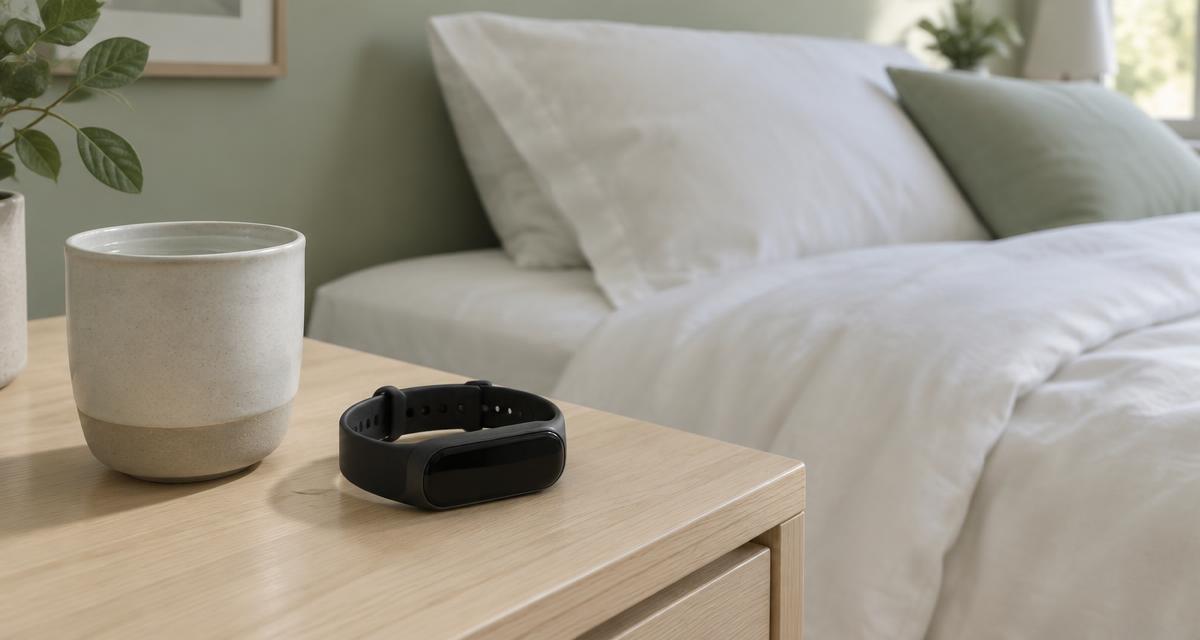
Which sets up the central irony of the entire sleepmaxxing trend: of all the hacks in it, the one with the best-documented capacity to ruin your sleep is the device you bought to measure it.
That doesn't mean the whole trend is nonsense. Some of it works. Some of it is harmless theatre. One part of it has sent people to hospital. Here's the sorted version, with the actual studies.
Part 1: What sleepmaxxing actually is
Sleepmaxxing is a catch-all term, popularised on TikTok, for any tip, gadget or hack meant to help you fall asleep faster, stay asleep longer, or sleep more deeply.
In practice it covers: mouth taping, nostril expanders, magnesium "sleepy girl" mocktails, kiwis before bed, melatonin drinks, white noise machines and masks, blue-light-blocking glasses, cold bedrooms, weighted blankets, "pineal gland" meditation, breathwork — and above all, a tracker on your wrist or finger producing a score every morning.
The underlying instinct is good. Sleep genuinely is the foundation of everything else, and taking it seriously beats ignoring it. The problem is that the trend's attention is distributed almost exactly backwards: enormous enthusiasm for the novel and purchasable, very little for the boring things that actually move the needle.
Part 2: The honest ranking
Tier 1 — Works, and is annoyingly boring
None of this is new, none of it is purchasable, and all of it has better evidence than everything below.
- A consistent sleep and wake time, including weekends.
- A cool bedroom — sleep specialists commonly recommend around 60–67°F, roughly 16–19°C.
- Less light in the evening, especially the hour before bed.
- Breathwork and mindfulness. Anita Shelgikar, president-elect of the American Academy of Sleep Medicine, points to their effect on stress and relaxation.
Neal Walia, a sleep specialist at UCLA Health, puts the basics ahead of every gadget — and he's right in a way that's inconvenient for content: the most effective sleep intervention available to you is a schedule you keep.
Our own guides to building a bedtime routine and resetting your circadian rhythm are both squarely in this tier, as is cutting caffeine earlier than you think.
Tier 2 — Some real evidence
- Melatonin. Backed by randomised, double-blind, placebo-controlled trials. The crucial nuance the trend gets wrong: melatonin is a timing signal, not a sedative. It's most useful for shifting a body clock that's drifted, in small doses, taken well before bed — not as a stronger nightcap.
- Reducing blue light in the evening. Connected to circadian regulation, and the effect is likely about light exposure generally rather than the glasses specifically. Turning the lights down is free.
- Kiwi before bed. Genuinely has a study behind it — one trial found improved sleep quality, with increases in serotonin and melatonin, in athletes. One study, one population. Harmless, cheap, and worth a try if you like kiwi.
Tier 3 — Weak, mixed, or working on your expectations
- White noise. Results across studies are mixed, which may surprise people. Our white, pink and brown noise guide goes into what the differences actually are.
- Magnesium — and this one deserves detail, because the "sleepy girl mocktail" is one of the trend's biggest exports.
A 2026 randomised, double-blind, placebo-controlled trial in Frontiers in Nutrition gave 100 adults aged 18–45 who reported dissatisfied sleep either 2 g of magnesium L-threonate daily or a placebo, for six weeks. Sleep was measured both by questionnaire and by Oura Ring.
The results split neatly in two. Self-reported sleep-related impairment improved more in the magnesium group (p = 0.043). But there was no difference in sleep disturbance (p = 0.316), no difference in restorative sleep (p = 0.439), and no difference on any of the objectively tracked sleep measures. The authors' own summary was that it improved some subjective but not objective measures of sleep. Worth noting too that cognition was the trial's primary focus, which makes these sleep results secondary findings rather than what the study was built to detect.
So: people taking magnesium felt somewhat better about their sleep, while their measured sleep was unchanged. That's not nothing — feeling better about your nights has real value. But it's a long way from the claims being made for it, and it's worth knowing which of the two you're buying.
Tier 4 — No evidence
- "Pineal gland" meditation. Claims that it induces sleep in under ten minutes are unsupported. If you enjoy the practice, enjoy it; the mechanism being sold to you isn't real.
Tier 5 — Stop. This one can hurt you.
Mouth taping. This is the hack that needs a warning rather than a rating.
A 2025 systematic review in PLOS One, led by Jess Rhee at Western University, gathered every study available — 10 studies, 233 patients, published between 1999 and 2024. All ten were rated low quality.
On the headline measure, the apnea-hypopnea index, six studies measured it: two found a significant reduction, three found no significant change. Snoring and mouth leak did improve in the studies that looked at them. Oxygen saturation and CO₂ showed no significant change.
Safety concerns were raised in four of the ten studies. The central risk is asphyxiation in people who cannot adequately breathe through their nose — and the people most drawn to mouth taping are, by definition, people who breathe through their mouths, which is frequently because their nose is obstructed. The authors concluded there is insufficient evidence that it is effective or safe for the broader population with sleep-disordered breathing, and warned of a potentially serious risk of harm to people practising the trend indiscriminately.
Clete Kushida, a sleep neurologist at Stanford, adds a clinical observation that should end the discussion: he has seen patients develop aspiration pneumonia after taping their mouths shut.
If you breathe through your mouth at night, that is information worth taking to a doctor — it can signal nasal obstruction or sleep apnea, both of which are treatable. Taping over the symptom is not treating it.
Part 3: The tracker paradox
Now the big one.
First: the term, and where it came from
In 2017, researchers from Rush University Medical College and Northwestern's Feinberg School of Medicine published a case study titled "Orthosomnia: Are Some Patients Taking the Quantified Self Too Far?"
They described three patients who had become intensely focused on their sleep tracker data. They were spending excessive time in bed trying to improve their scores — behaviour that may have worsened the insomnia they were trying to fix. Notably, these patients didn't always fit the typical insomnia profile. What was keeping them awake was worry about the data.
Orthosomnia is not a formal diagnosis. It is a described pattern, and the pattern is specific: checking your score immediately on waking, reorganising your evening around optimising it, staying in bed longer to chase it, and feeling genuinely deflated by a bad report.
How common is it?
A 2024 cross-sectional study in Brain Sciences surveyed 523 adults aged 18–70 and built a four-criterion algorithm to estimate prevalence. Depending on how strictly they set the threshold, between 3.0% and 14.0% of the whole sample met their criteria.
Two findings stand out. Tracker users scored significantly higher on a sleep-anxiety questionnaire than non-users (median 35 versus 30, p < 0.001). And people flagged by the algorithm had much higher insomnia severity scores at every threshold — a median of 8 against 4 for everyone else (p < 0.001).
The honest caveats, because they matter: the algorithm is a preliminary research tool the authors describe as unvalidated. The study is cross-sectional, so it cannot establish that tracking caused the anxiety rather than anxious sleepers being drawn to tracking. And the sample skewed young — median age 21 — and was 81% female. This is an early signal, not a settled number.
And now the part that should actually change your behaviour
Here is what almost no sleepmaxxing content tells you: the numbers people agonise over are the least accurate ones their device produces.
A 2024 study in Sensors by Kainec and colleagues put five consumer devices — Fitbit Inspire HR, Fitbit Versa 2, Garmin Vivosmart 4, Oura Ring Gen 2 and the Withings sleep mat — against polysomnography, the clinical gold standard, in 50 young adults.
| What the device reports | How accurate it was |
|---|---|
| Total sleep time | Reasonably good — error of about 5% to 14% depending on device |
| Light sleep | Acceptable — error around 19% to 27% |
| Deep sleep | Poor — error above 20% for every single device |
| REM sleep | Poor — error above 20% for every single device |
| Time awake after falling asleep | Very poor — error from 59% all the way to 138% |
Read that table again with your morning routine in mind.
Your device is decent at the one thing you could have worked out yourself — roughly how long you were asleep. It is unreliable at precisely the two metrics that the whole sleepmaxxing culture is built on: your deep sleep and your REM. And it is wildly unreliable about how much you were awake during the night.
The authors also found a consistent bias pattern: devices tended to overestimate on nights when a value was low and underestimate when it was high — meaning they actively compress the real variation you're trying to detect.
So the loop runs like this. You wake up feeling fine. Your ring tells you that you got 38 minutes of deep sleep, a number carrying an error margin above 20%. You feel worse than you did before you looked. Tonight you go to bed early and anxious to fix it, lie there awake, and generate a genuinely worse night — which the device will also measure imprecisely.
You have been made anxious by a number that doesn't know.
Part 4: What to do instead
Fix the boring tier first. A consistent wake time, a cool dark room and an earlier caffeine cutoff will outperform every purchase in this article. If you do only one thing, do the wake time.
If you keep your tracker, change how you read it. Look at weekly and monthly trends, never a single night. Treat it as a rough guide to patterns, which is what the sensors can actually support — not a verdict on last night.
Stop checking it first thing in the morning. That specific habit is one of the documented orthosomnia behaviours, and it hands the number the power to set your mood before your own experience gets a vote.
Let how you feel outrank what the ring says. This was the core clinical worry in the 2017 paper: patients who trusted the device over their own sense of being rested. If you woke up feeling good, you slept well. That is not naïve — it's better data than a 20%-error estimate of your REM.
Consider a two-week tracker holiday. Take it off, judge your nights by how you feel, and see what happens. For some people this single change does more than every hack in Tier 2 combined. You can always put it back on.
And if something is genuinely wrong, get it assessed. Persistent insomnia, loud snoring, gasping, or exhaustion despite enough hours are all things a doctor can help with and a wearable cannot diagnose. Buying another device is the one response that reliably doesn't work.
Where sound fits — and why it's the opposite of sleepmaxxing
A straight answer, since this is a site about relaxing music.
Music and ambient sound are not a cure for insomnia, and the evidence for white noise specifically is genuinely mixed. What they are is the one item on this entire list with nothing to measure, nothing to buy, nothing to optimise and no score to fail.
That turns out to matter. Every hack in Tier 2 and 3 adds one more thing to monitor and one more way to feel you've got it wrong. A track playing while you wind down asks nothing of you. You cannot do it badly. There is no morning report telling you your relaxation was sub-optimal — and given what Part 3 just established, the absence of a number may be the feature rather than the limitation.
If you want the mechanism, Why Does Music Help You Sleep? covers it. If your problem is specifically a mind that won't stop, How to Calm a Racing Mind at Night and Progressive Muscle Relaxation are both better uses of fifteen minutes than reading a sleep score. And NSDR is worth knowing about for the nights that don't go well.
The best summary of this whole trend came from Walia at UCLA, and it fits in one line: "Oftentimes, the best sleepers are those who think about it less."
The irony of a sleep-optimisation movement is that the final optimisation is letting go of the project.
A note on health: This article is general information, not medical advice. Do not try mouth taping, and speak to a doctor if you breathe through your mouth at night, snore loudly, gasp or choke in your sleep, or feel exhausted despite adequate hours — these can indicate sleep apnea or nasal obstruction, which are diagnosable and treatable. Check with a healthcare professional before starting any supplement, including magnesium and melatonin, particularly if you take medication, are pregnant or breastfeeding, or have a kidney or heart condition. Persistent insomnia deserves proper assessment; cognitive behavioural therapy for insomnia is the recommended first-line treatment and is more effective than anything in this article.
AI disclosure: This article was written with the assistance of artificial intelligence and reviewed by a human editor before publication. All figures come from the published sources listed below.
Sources
- Baron KG, et al. Orthosomnia: Are Some Patients Taking the Quantified Self Too Far? Journal of Clinical Sleep Medicine, 2017 (Rush University Medical College and Northwestern University Feinberg School of Medicine).
- Prevalence of Orthosomnia in a General Population Sample: A Cross-Sectional Study. Brain Sciences, 2024;14(11):1123 (523 adults).
- Kainec et al. Evaluating Accuracy in Five Commercial Sleep-Tracking Devices Compared to Research-Grade Actigraphy and Polysomnography. Sensors, 2024;24(2):635 (50 adults).
- Rhee J, et al. Systematic review of mouth taping for sleep-disordered breathing. PLOS One, 2025; doi:10.1371/journal.pone.0323643 (10 studies, 233 patients).
- Lopresti and Smith. Randomised, double-blind, placebo-controlled trial of magnesium L-threonate (Magtein). Frontiers in Nutrition (100 adults).
- National Geographic — expert commentary from Clete A. Kushida (Stanford), Anita Shelgikar (American Academy of Sleep Medicine) and Neal Walia (UCLA Health) on which sleepmaxxing practices have evidence.
This article was created with the assistance of AI and reviewed by our team for accuracy. It is intended for general wellness and informational purposes only and is not medical advice.