What Is NSDR? The Non-Sleep Deep Rest Everyone's Trying
Listen to this article
Listen to this article
Listen while you read
🧘 Meditation music
Press play and let the music stay with you while you read. No need to leave the page.
This player uses YouTube, which sets third-party cookies. Load it only if you want to.
Clicking accepts marketing/media cookies.
What Is NSDR (Non-Sleep Deep Rest)? The Trending Practice That Rests You Without Sleep
Imagine lying down for just 10 or 20 minutes and getting up feeling refreshed, calmer and mentally recharged, without actually falling asleep. That is the promise of NSDR, or "non-sleep deep rest", one of the most talked-about wellness practices of recent years. From busy executives to students to anyone running low on rest, people everywhere are discovering this simple, powerful way to recharge.
But what exactly is NSDR? Is it just a trendy new name for something old? And does it really work? Let's explore the practice, the science behind it, and how you can try it yourself, for free, today.
What Is NSDR?
NSDR stands for "non-sleep deep rest". It is a term coined by Dr. Andrew Huberman, a neuroscientist at Stanford University, to describe a family of practices that guide your body and mind into deep relaxation while you remain awake. The idea is to reach that dreamy, liminal state right on the edge between waking and sleeping, and rest there deeply, without fully drifting off.
Here is a key thing to understand: NSDR is not entirely new. Dr. Huberman openly based it on an ancient practice called Yoga Nidra ("yogic sleep" in Sanskrit), which has been around for centuries. He coined the more clinical-sounding term specifically to make the practice approachable for people who might be put off by the spiritual associations of traditional meditation and yoga. In short: NSDR is a modern, science-friendly rebranding of Yoga Nidra and similar guided-relaxation practices.
How Is It Different From Meditation or Sleep?
NSDR sits in a unique space between other states:
It's not quite meditation. In many forms of meditation you actively focus your attention or gently return a wandering mind. NSDR is more passive: you lie down and follow a guided recording that leads you through body scans and breath awareness. There is nothing to "achieve"; you just let go and rest. If you are new to sitting practice, our guide to the most common meditation mistakes for beginners explains the difference well.
It's not sleep. Unlike a nap, you do not lose consciousness. Your awareness gently persists the whole time, even as your body sinks into deep relaxation.
It's conscious, effortless rest. Think of it as deliberately downshifting your nervous system into its deepest "rest and digest" gear while staying awake to enjoy the ride.
The Science: Does NSDR Actually Work?
Let's be honest and balanced, because this matters. NSDR is genuinely promising, and much of the underlying research (mostly on Yoga Nidra) is encouraging, though some of the more dramatic claims still rest on early or small studies.
It calms your nervous system. NSDR shifts you out of the stressed "fight or flight" sympathetic state into the calming "rest and digest" parasympathetic state, largely through the vagus nerve. This is the core, well-supported mechanism behind its benefits.
It reduces stress and anxiety. Studies on Yoga Nidra have found it can meaningfully reduce stress, anxiety and even symptoms of depression.
It may improve sleep. Research suggests Yoga Nidra can reduce symptoms of insomnia and improve sleep quality and efficiency, and it may support the body's natural melatonin production. If you regularly wake up at 3am, a short evening session may help.
It can help you recover from lost sleep. It is absolutely not a replacement for real sleep, but Huberman suggests NSDR can restore some mental energy and focus when you are running on a deficit.
It may recharge your brain. Huberman has proposed that NSDR helps restore dopamine levels, supporting focus, motivation and mental clarity. This particular claim is intriguing but rests on limited early research, so hold it gently. For what is better established, see what happens to your brain when you meditate.
The honest takeaway: NSDR is a safe, free, genuinely useful tool for calming your nervous system, easing stress and supporting sleep, backed by solid science on its core relaxation effects, even if a few of the buzzier claims still need more study.
How to Do NSDR
The beauty of NSDR is its simplicity. You need no experience, and there is nothing to "get right".
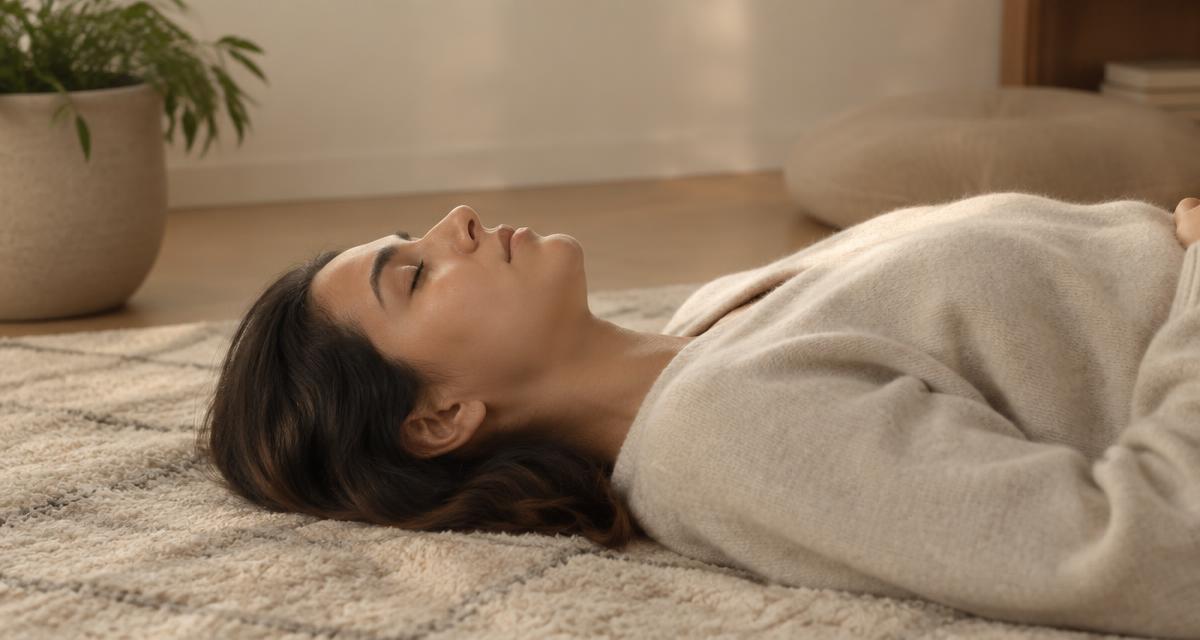
Find a comfortable position. Lie down on your back somewhere comfortable, a bed, a couch, a mat. Let your body feel fully supported.
Choose your timing. During the day, keep it to 10 to 20 minutes for a refreshing recharge that leaves you alert. At bedtime, a longer session can carry you gently into sleep, especially as part of a relaxing bedtime routine.
Follow a guided recording. NSDR is almost always done with guided audio: a calm voice leads you through relaxing your body part by part and gently directing your breath and attention. It is the closest cousin of body scan meditation, so if you enjoy one you will likely love the other.
Let go and simply rest. There is no goal. If your mind wanders, that is fine. If you drift toward sleep during a daytime session, gently notice and stay in that restful in-between space.
Set the mood with sound. Soft instrumental music underneath a session, or on its own, deepens relaxation and helps your nervous system settle, which is why music helps you sleep so reliably.
A Gentle Note
NSDR is safe and beneficial for most people. That said, if you live with significant trauma or a suspected sleep disorder, check in with a healthcare professional first. NSDR is a wonderful complement to good sleep, not a substitute for it. Your body still needs real, regular sleep to thrive.
Give Yourself Permission to Rest
Perhaps the most beautiful thing about NSDR is what it represents: permission to pause. In a world that glorifies constant productivity, NSDR reframes deep rest as something valuable, even essential, and gives you a simple, structured way to access it. Just ten quiet minutes can leave you feeling remarkably restored.
So today, if you feel frazzled, foggy or worn down, try it. Lie down, press play on a gentle guided session or some soft music, close your eyes and simply let yourself rest. You do not have to fall asleep. You just have to let go.
This article was created with the assistance of AI and reviewed by our team for accuracy. It is intended for general wellness and informational purposes only and is not medical advice.
Keep reading: Body scan meditation for sleep and relaxation • How to calm your vagus nerve • What happens to your brain when you meditate • Why do I wake up at 3am • How to build a relaxing bedtime routine • Why does music help you sleep
This article was created with the assistance of AI and reviewed by our team for accuracy. It is intended for general wellness and informational purposes only and is not medical advice.