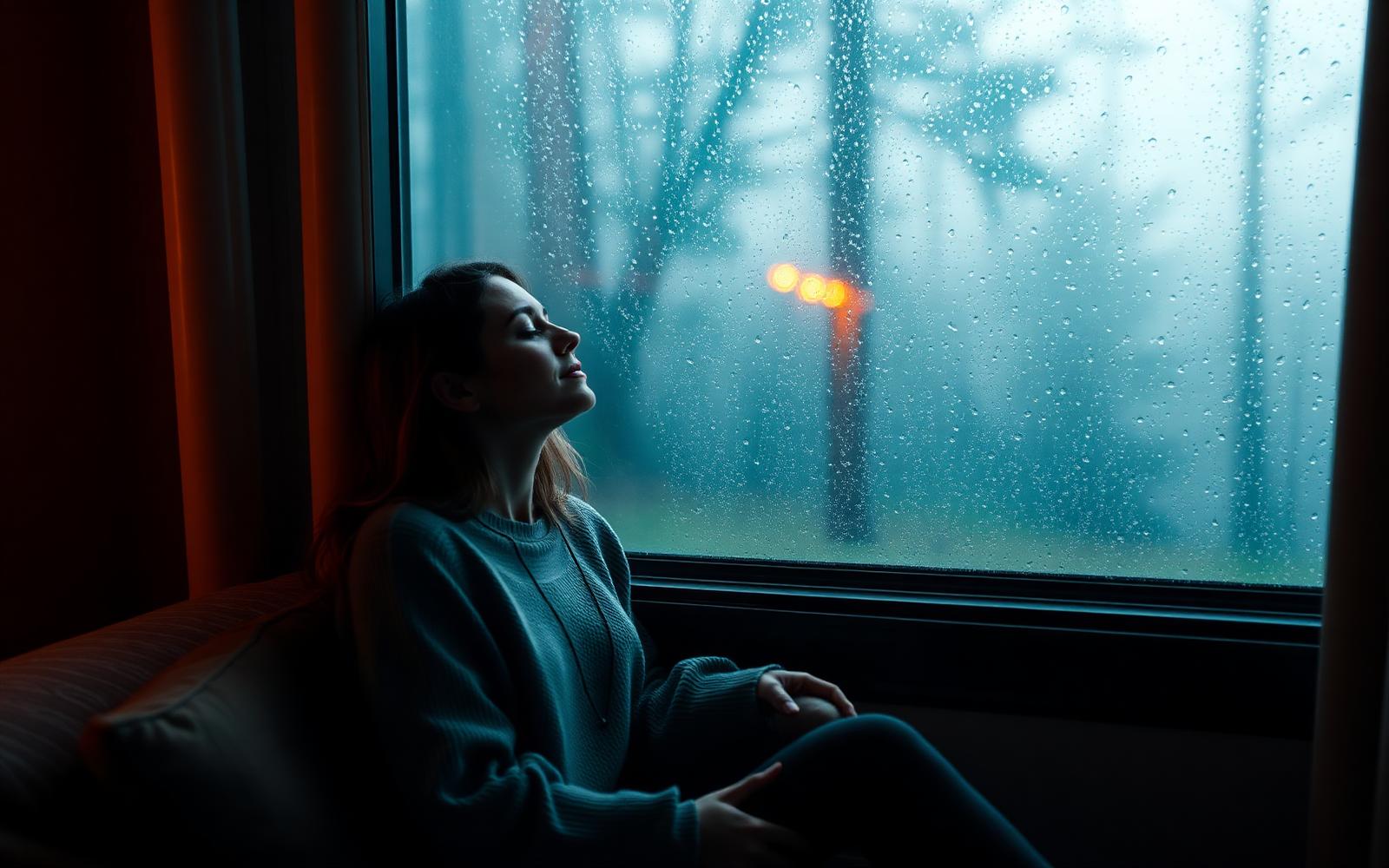
Nature Sounds for Anxiety: The Science of How Rain and Forest Sounds Calm Your Brain
Introduction
Rain against a window. Waves rolling onto the shore. Wind moving through a forest canopy. Something about these sounds instantly softens the tension in your shoulders — even if you can't explain why.
It's not your imagination. Nature sounds for anxiety have real, measurable effects on your nervous system, and a growing body of research explains exactly what's happening in your brain when you press play.
In this article, you'll learn why nature sounds are so effective at calming anxiety, what the science says about different types of natural sound, and how to use them intentionally to feel calmer today.
Why Do Nature Sounds Calm Your Brain?
In 1984, biologist E.O. Wilson proposed what's now known as the biophilia hypothesis: humans have an innate, evolutionary need to connect with the natural world. For most of human history, we lived outdoors, and our brains learned to read natural sounds as signals of safety — birdsong meant no predators were near, flowing water meant resources were close, steady wind meant the environment was stable.
Modern life surrounds us with the opposite: car horns, notifications, sirens, overlapping voices. Your brain interprets many of these as low-level threats, keeping your sympathetic nervous system — the "fight or flight" response — quietly switched on, even when you're perfectly safe.
Nature sounds do the reverse. They cue your parasympathetic nervous system, the "rest and digest" state, telling your body it's safe to relax.
The Research Behind It
Two theories from environmental psychology explain this in more detail:
- Stress Reduction Theory (Roger Ulrich) proposes that humans have evolved fast, largely unconscious responses that lower stress when exposed to natural settings and sounds.
- Attention Restoration Theory (Kaplan & Kaplan) suggests natural sounds hold our attention gently, without demanding effort — which lets our overworked, directed attention recover.
One of the most cited studies in this field, Ulrich's 1984 research on post-surgical patients, found that those with a hospital window view of trees recovered faster and needed less pain medication than patients facing a brick wall — early evidence that natural stimuli change physiological stress responses, not just mood.
More recent studies using heart rate variability (HRV), a reliable marker of nervous system balance, have found that nature-based soundscapes produce more consistent calming effects than urban or mechanical sound.
5 Nature Sounds and Why They Work
Not all nature sounds affect your body the same way. Here's what the research suggests about the most popular categories:
1. Rain
Rain is one of the most searched-for sleep and relaxation sounds worldwide. Its randomness is fast enough to mask sudden noises, but even enough to feel soothing rather than jarring — similar to how white and pink noise work.
2. Ocean waves
The slow, rhythmic rise and fall of waves closely matches the breathing rate of a relaxed body — roughly 6 to 8 cycles per minute. Listening to waves can gently guide your own breathing to slow down without any conscious effort, which is part of why ocean sounds are so popular for bedtime and meditation.
3. Forest and birdsong
Forest soundscapes are rich and layered, engaging your attention softly without demanding focus. This makes them especially effective during work or study — your brain reads birdsong as a sign of an open, safe environment.
4. Rivers and streams
Flowing water sits in a similar frequency range to white noise, making it effective for masking distracting background sounds while still feeling organic rather than mechanical.
5. Wind
Gentle wind signals a stable environment, and its slow, whooshing variations make it one of the more meditative nature sounds — often layered with rain or forest sounds for a fuller soundscape.
How to Use Nature Sounds for Anxiety Relief
You don't need any special equipment — just a few intentional habits:
- Pick one sound and stay with it for at least 10 minutes. Switching sounds too often keeps your brain analyzing instead of relaxing.
- Use nature sounds during transitions — right after a stressful meeting, before deep work, or in the 20 minutes before bed.
- Pair it with slow breathing. Combining nature sounds with a simple breathing pattern amplifies the calming effect on your nervous system.
- Keep the volume low. Nature sounds should sit in the background of your awareness, not demand attention.
- Try it during a panic moment, not just as a bedtime ritual — the parasympathetic response can kick in within minutes.
What the Benefits Look Like
Research on natural soundscapes points to several consistent benefits:
- Lower self-reported stress and anxiety after just a few minutes of listening
- Improved heart rate variability, a marker of nervous system balance
- Faster physiological recovery after a stressful event compared to silence
- Better sustained attention, thanks to the gentle, non-demanding nature of natural sound
- Easier sleep onset when used as part of a wind-down routine
Frequently Asked Questions
Do nature sounds really reduce anxiety, or is it just a placebo?
Multiple studies using objective measures like heart rate variability — not just self-reported mood — show that natural sounds shift the body toward a calmer physiological state. The effect is real, even if it also feels pleasant.
What's the single best nature sound for anxiety?
There isn't one universal answer — it depends on your nervous system. Rain and ocean waves tend to work best for winding down, while forest and river sounds are often preferred during focused work. The best approach is to try a few and notice which one actually slows your breathing.
How long should I listen to nature sounds to feel calmer?
Many people notice a shift within 5 to 10 minutes. For anxiety in the moment, even 2 to 3 minutes of focused listening paired with slow breathing can help.
Can I fall asleep with nature sounds playing all night?
Yes — many people find continuous, low-volume nature sounds genuinely support deeper sleep by masking sudden disruptions. Just keep the volume low, ideally below 50 decibels.
Conclusion
Nature sounds for anxiety aren't just a pleasant backdrop — they're a legitimate, research-backed way to shift your nervous system out of stress mode. It isn't really about escaping your environment. It's about giving your brain the cues it has relied on for hundreds of thousands of years to recognize when it's finally safe to relax.
Ready to try it? Explore our free Nature Sounds playlist on Deep Relax Music, or take the Mood Quiz to find the exact sound your nervous system needs right now.