What Are Binaural Beats and Do They Really Work?
Listen to this article
Listen to this article
Listen while you read
🏡 Cozy ambience
Press play and let the music stay with you while you read. No need to leave the page.
This player uses YouTube, which sets third-party cookies. Load it only if you want to.
Clicking accepts marketing/media cookies.
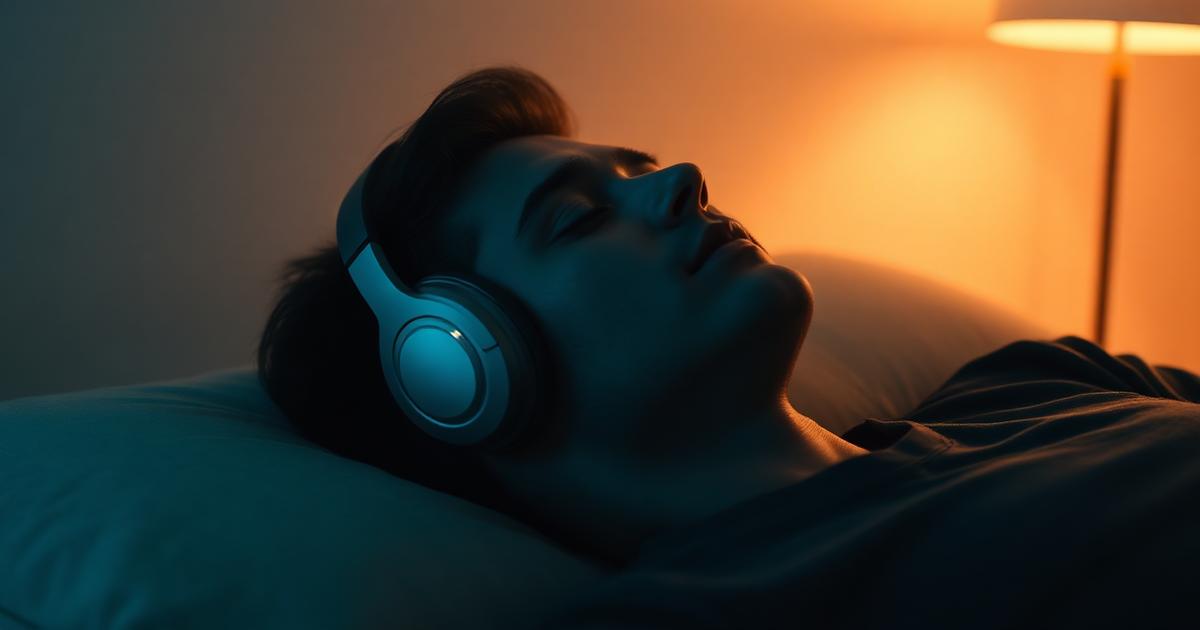
Imagine putting on your headphones, pressing play on what sounds like a soft, steady hum, and feeling your mind gradually settle into calm or sharpen into focus, all from sound alone. That is the promise of binaural beats, one of the most talked-about sound techniques in the wellness world.
But what exactly are they? And perhaps more importantly, do they actually work, or is it just clever marketing? Let's explore the science, the claims, and how to try them for yourself.
What Are Binaural Beats?
Binaural beats are a kind of auditory illusion. Here is the clever part: when you play two slightly different tones, one in each ear, your brain does something surprising. Instead of hearing two separate sounds, it detects the difference between them and creates a third, phantom "beat" all on its own.
For example, if you hear a tone at 200 Hz in your left ear and 210 Hz in your right ear, your brain perceives a third beat at 10 Hz, the difference between the two. That 10 Hz beat does not actually exist in the room. Your brain is generating it.
Because each ear needs to receive a different tone, there is one essential rule: binaural beats only work with stereo headphones. Without them, the illusion falls apart.
How Are They Supposed to Work?
The theory behind binaural beats is called "brainwave entrainment." The idea is that when your brain perceives that phantom beat, its own electrical activity gradually syncs up to match that frequency.
This matters because different brainwave frequencies are linked to different mental states:
- Delta waves (roughly 1-4 Hz) are associated with deep, dreamless sleep.
- Theta waves (roughly 4-8 Hz) are linked to deep relaxation, meditation, and creativity.
- Alpha waves (roughly 8-12 Hz) appear when you are calm and relaxed with your eyes closed.
- Beta waves (roughly 13-30 Hz) occur when you are awake, alert, and focused.
The idea is that by listening to a binaural beat tuned to a specific frequency, you might gently guide your brain toward that state, using a lower frequency to relax or sleep, or a higher one to focus. In theory, it is like a volume dial for your mental state.
But Do They Actually Work?
Here is where we need to be honest, because this is where a lot of websites overpromise. The truth is that the science is genuinely mixed.
Some research is encouraging. A large 2018 analysis of 22 studies found that binaural beats could boost aspects of cognition like memory and attention, and help reduce anxiety. Other studies have reported that listeners feel more relaxed, focused, and less anxious, and some early research suggests they may help ease the transition into sleep.
But other studies have been far less convinced. Some researchers have concluded that binaural beats are not a reliable tool for boosting thinking or focus, and a 2023 review found only limited evidence for their effectiveness across various mental functions.
So what is the honest takeaway? Binaural beats are a promising and genuinely interesting tool, but not a guaranteed magic switch. Results vary a lot from person to person. For some people they seem to help meaningfully; for others, the effect is subtle or absent. The good news is that they are free to try, safe for most people, and easy to experiment with, so you can simply find out how your own brain responds.
If you have epilepsy or a history of seizures, check with your doctor before using brainwave-entrainment audio.
How to Try Binaural Beats
If you are curious, here is how to give them a fair test:
- Use stereo headphones. This is non-negotiable. The effect physically cannot work through a single speaker.
- Pick a frequency that matches your goal. Look for lower-frequency beats (delta or theta) for relaxation and sleep, or higher-frequency beats (beta) for focus and alertness. Many free tracks are labeled by their intended purpose.
- Find a quiet, undisturbed spot. Binaural beats work best when you can settle in without interruptions.
- Keep the volume comfortable. You do not need it loud. A soft, gentle level is plenty.
- Give it time and consistency. Like meditation, the effect may deepen with regular practice, so do not judge it on a single try.
Binaural Beats or Relaxing Music?
A fair question: if the science is mixed, why not just listen to calming music instead? The honest answer is that they do different things, and there is no reason to choose only one.
Binaural beats are precise, functional tones aimed at nudging a specific brain state. Relaxing music works on your emotions, your heart rate, and your stress levels in a warmer, more familiar way, and the research supporting music for relaxation and stress relief is broad and well established.
In fact, many people enjoy the best of both worlds: gentle instrumental music layered with soft binaural tones underneath. If binaural beats intrigue you, treat them as one more tool in your relaxation toolkit, alongside the calming music, breathing, and quiet rituals that already work for you.
The Bottom Line
Binaural beats are a fascinating meeting point of sound and neuroscience, a simple pair of tones that invite your brain to create something new. Whether they become a powerful part of your routine or just an interesting experiment, they are safe, free, and easy to explore.
So if you are curious, put on your headphones, find a quiet moment, and listen. Your brain might surprise you, and even if the beats do nothing dramatic, a few quiet minutes of calm are never wasted.
At Deep Relax Music, we create soft instrumental music designed to help you relax, focus, and sleep, the perfect companion to any calming sound practice. Press play, breathe slow, and find your calm.
Keep reading: Best music for focus and concentration • Why does music help you sleep • Meditation for beginners: 7 mistakes • The 4-7-8 breathing technique
Listen on YouTube → • Stream on Spotify →
Keep reading: 432 Hz vs 440 Hz: Do "healing frequencies" really work?
This article was created with the assistance of AI and reviewed by our team for accuracy. It is intended for general wellness and informational purposes only and is not medical advice.