The 4-7-8 Breathing Technique to Fall Asleep Faster
Listen to this article
Listen to this article
Listen while you read
🧘 Meditation music
Press play and let the music stay with you while you read. No need to leave the page.
This player uses YouTube, which sets third-party cookies. Load it only if you want to.
Clicking accepts marketing/media cookies.
Some nights, sleep just won't come. Your body is tired, but your mind keeps spinning and your breath stays shallow and quick. What if you could gently switch your body out of that restless state using nothing but your own breath?
That is exactly what the 4-7-8 breathing technique is designed to do. It is one of the simplest, most popular relaxation methods in the world, it costs nothing, requires no equipment, and you can do it right now, lying in bed. Let's walk through how it works and how to use it tonight.
What Is the 4-7-8 Breathing Technique?
The 4-7-8 technique is a simple breathing pattern: you inhale for 4 seconds, hold your breath for 7 seconds, and exhale slowly for 8 seconds. Sometimes called the "relaxing breath," it was popularized by Dr. Andrew Weil, a physician and integrative medicine specialist, and it draws on the ancient yogic practice of pranayama, the art of breath regulation used in Eastern cultures for thousands of years.
Dr. Weil has described the technique as a "natural tranquilizer for the nervous system," noting that it is subtle at first but grows more powerful with regular practice.
Why Does It Work? The Science of the Slow Exhale
The magic of 4-7-8 lies in what it does to your nervous system. When you are stressed or anxious, your sympathetic nervous system, the body's "fight or flight" accelerator, is running hot. Your breath goes short and shallow, and your heart rate climbs. This is the opposite of the state you need for sleep.
The 4-7-8 pattern flips the switch. The long, slow exhale is the key, it activates the parasympathetic nervous system, your body's "rest and recover" brake. As it engages, your heart rate slows, your muscles relax, and your blood pressure eases. In other words, you are gently guiding your body into the exact physical state that makes sleep possible.
By controlling your breath, you interrupt the stress cycle that keeps you awake, and give your body permission to rest.
How to Do the 4-7-8 Breathing Technique
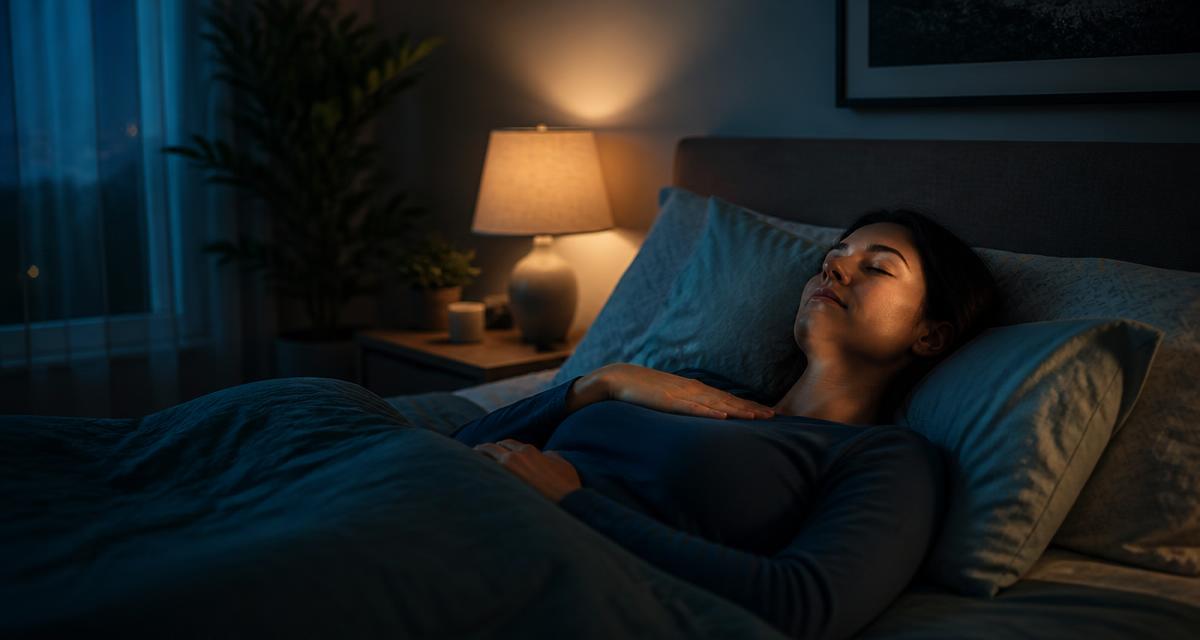
Here is the simple step-by-step. You can do this sitting up, but if your goal is sleep, feel free to do it lying comfortably in bed.
- Get comfortable. Relax your body, and rest the tip of your tongue against the roof of your mouth, just behind your upper front teeth. Keep it there throughout.
- Start with an exhale. Breathe out completely through your mouth, making a soft "whoosh" sound.
- Inhale for 4. Close your mouth and breathe in quietly through your nose for a count of 4.
- Hold for 7. Gently hold your breath for a count of 7.
- Exhale for 8. Breathe out slowly through your mouth for a count of 8, making that soft whoosh sound again.
- Repeat. That is one full cycle. Repeat it three to four times.
A helpful note: the exact number of seconds matters less than keeping the ratio of 4:7:8. If holding your breath for 7 seconds feels like too much at first, speed up the count while keeping the same proportions, and slow down as you get more comfortable.
Tips to Get the Most From It
Be consistent. This is not always an instant magic trick. While some people feel calmer right away, the technique tends to grow more effective with practice as your body learns to recognize the pattern. Practicing twice a day helps your body respond faster over time.
Start small. Begin with just three to four cycles. As it becomes comfortable, you can gradually work up to more.
Use it anytime stress rises. Beyond bedtime, the 4-7-8 breath is a wonderful tool for easing anxiety before a stressful moment, or for getting back to sleep if you wake in the night.
One gentle caution. Some people feel a little lightheaded the first few times. If that happens, simply pause and breathe naturally for a moment, and try again another time. It is always best to practice sitting or lying down. If you live with a breathing condition or chronic insomnia, check with your doctor before making breathwork a regular habit.
Pair It With Soft, Calming Music
Breathwork and gentle music are natural partners. As you settle into the 4-7-8 rhythm, soft instrumental music in the background can deepen the calm, giving your mind something soothing to rest on while your breath does its quiet work. Together, they create a peaceful bedtime ritual that signals to your body, night after night, that it is time to let go.
Let Your Breath Carry You to Sleep
The next time your mind won't slow down at night, try this: lie back, soften your body, put on something gentle, and breathe. In for 4, hold for 7, out for 8.
Your breath is always with you, a quiet, built-in tool for calm. Let it carry you gently toward rest.
At Deep Relax Music, we create soft instrumental music, gentle piano and calming guitar, made to pair with breathwork, relaxation, and peaceful sleep. Press play, breathe slow, and let the day go.
Keep reading: Box breathing: the Navy SEAL technique to calm down fast • More breathing techniques for stress • How to calm a racing mind at night • Music for deep sleep • How to build a relaxing bedtime routine • How to reduce stress during a busy day • What are binaural beats and do they work • A calm morning routine to reduce anxiety • Cómo hacer que tu casa se sienta tranquila y acogedora • Why do I wake up at 3am • How to stop overthinking • Read how to calm your vagus nerve
This article was created with the assistance of AI and reviewed by our team for accuracy. It is intended for general wellness and informational purposes only and is not medical advice.