Foods That Help You Sleep (and What to Avoid at Night)
Listen to this article
Listen to this article
Listen while you read
🌙 Sleep music
Press play and let the music stay with you while you read. No need to leave the page.
This player uses YouTube, which sets third-party cookies. Load it only if you want to.
Clicking accepts marketing/media cookies.
Foods That Help You Sleep: What to Eat (and Avoid) for Better Rest
We often think of good sleep as a matter of a comfortable bed, a dark room, and a calm mind, and those things matter enormously. But there is another powerful factor that many people overlook: what you eat. The food on your plate has a real, measurable effect on how easily you fall asleep and how deeply you rest. In fact, certain foods contain the very building blocks your body uses to make its sleep hormones.
The good news is that eating for better sleep is simple and delicious. Let's explore the foods that can help you drift off, the ones to avoid before bed, and how to time it all for the best rest.
How Food Affects Your Sleep
Before the list, here is the "why." A few key nutrients play starring roles in sleep, and knowing them helps you understand what to reach for.
Tryptophan is an amino acid your body uses to make serotonin, a calming brain chemical, which in turn becomes melatonin, the hormone that regulates your sleep. Foods rich in tryptophan give your body the raw material for restful sleep.
Melatonin itself is found naturally in some foods, gently nudging your body toward sleepiness. If your sleep timing feels off entirely, food alone won't fix it — see how to reset your circadian rhythm.
Magnesium helps calm the nervous system and relax your muscles, and it supports your body's melatonin production. It is one of the most important minerals for deep, restful sleep.
When you eat foods rich in these, especially in the evening, you are quite literally giving your body the ingredients it needs to rest well.
The Best Foods to Help You Sleep
Here are some of the most sleep-friendly foods, backed by research.
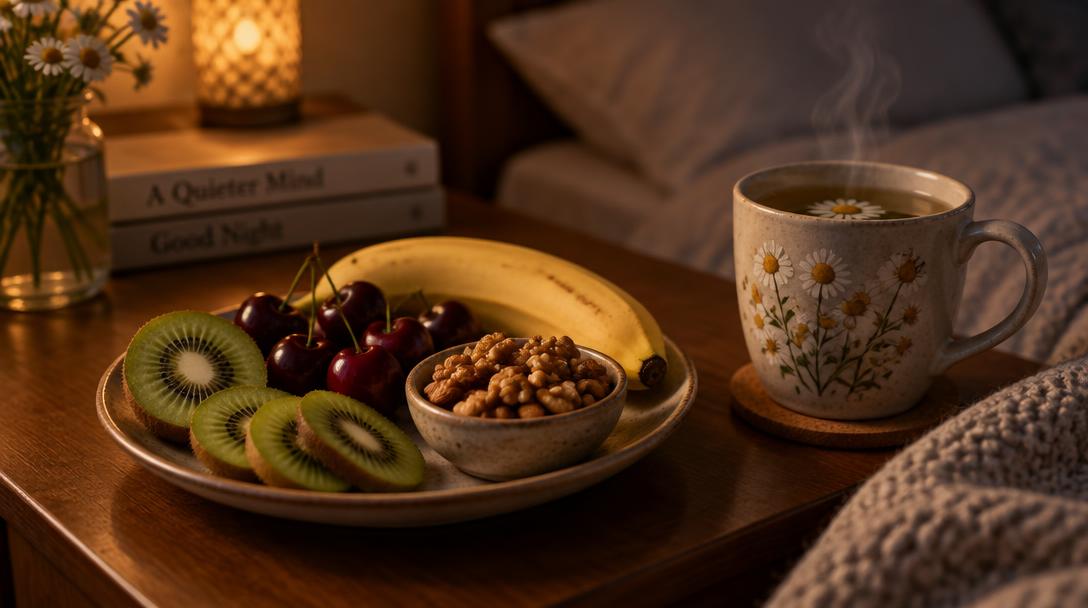
Kiwi. One of the most impressive sleep foods. In a clinical study, people who ate two kiwis about an hour before bed for four weeks fell asleep significantly faster and slept better. Kiwis are rich in serotonin and antioxidants.
Tart cherries (and tart cherry juice). One of the few natural food sources of melatonin. Studies have found that tart cherry juice can increase total sleep time and improve sleep quality, likely thanks to its melatonin content.
Almonds, walnuts, and pistachios. These nuts offer a lovely combination of magnesium, and in some cases melatonin, making a small handful a perfect sleep-friendly snack.
Bananas. Rich in magnesium and potassium (which relax muscles) plus tryptophan, bananas are a simple, soothing bedtime choice.
Oats. Warm and comforting, oats contain melatonin and sleep-supporting complex carbs, which is part of why a small bowl of oatmeal makes a cozy evening snack.
Warm milk and dairy. The classic bedtime drink is not just folklore, milk contains tryptophan, and the comforting ritual of a warm drink adds to the effect.
Fatty fish (like salmon). Rich in omega-3s and vitamin D, which are linked to better sleep regulation, a great choice for an earlier evening meal.
Turkey and chicken. Well known for their tryptophan content (that post-holiday-meal drowsiness is real).
Leafy greens and pumpkin seeds. Excellent sources of magnesium to help calm your body for rest.
Herbal teas. Caffeine-free teas like chamomile and peppermint are wonderfully calming, and the warm, soothing ritual itself helps signal that it is time to wind down.
A Simple Trick: Pair Protein With Complex Carbs
Here is a useful science-backed tip. Tryptophan has to compete with other amino acids to reach your brain, so eating tryptophan-rich foods alone is not the most effective approach. The clever solution is to pair a tryptophan food with some complex carbohydrates, think a small turkey sandwich on whole-grain bread, or oats with a few nuts. The carbs help clear the path so that tryptophan can reach your brain more easily. A balanced little snack beats a single food on its own.
Foods and Drinks to Avoid Before Bed
Just as some foods help, others quietly sabotage your sleep. In the hours before bed, try to limit:
Caffeine. The obvious one, but people underestimate how long it lingers. Caffeine can stay in your system for many hours, so that afternoon coffee (or evening tea, cola, or chocolate) can still be disrupting your sleep at night. Try to cut it off by early afternoon.
Alcohol. It may make you feel sleepy at first, but alcohol fragments your sleep later in the night and robs you of deep, restorative rest. It is one of the biggest hidden sleep disruptors — and a common reason people wake up at 3am.
Heavy, large, or rich meals late at night. A big meal close to bedtime forces your body to work on digestion when it should be resting, which can keep you awake and cause discomfort.
Spicy foods. These can cause heartburn and raise your body temperature, both of which interfere with falling asleep.
Sugary snacks. They cause blood sugar spikes and crashes that can disrupt your sleep through the night.
Timing Matters, Too
When you eat is almost as important as what you eat. Try to finish your main evening meal about three hours before bed, so your body has time to digest before you lie down. If you are hungry closer to bedtime, a small, light sleep-friendly snack (like a banana, a few almonds, or a small bowl of oats) about an hour before bed is perfect, just keep it light.
A Gentle Note
One thing to keep in mind: food is a supporting player, not a magic sleeping pill. Eating a kiwi will not knock you out instantly. Instead, think of sleep-friendly eating as one part of a bigger picture, working alongside a calming bedtime routine, a good sleep environment, and enough hours for your age to gently improve your rest over time. Small, consistent choices add up.
Eat Well, Sleep Well
The next time you are planning your evening, remember that good sleep can begin at the dinner table. Reach for those calming, nutrient-rich foods, keep the late-night caffeine and heavy meals in check, and give your body the ingredients it needs to rest. Pair it with a peaceful wind-down, perhaps a warm cup of herbal tea and some soft, calming music, and you are setting the stage beautifully for a restful night.
Sweet dreams start with what is on your plate.
This article was created with the assistance of AI and reviewed by our team for accuracy. It is intended for general wellness and informational purposes only and is not medical advice.